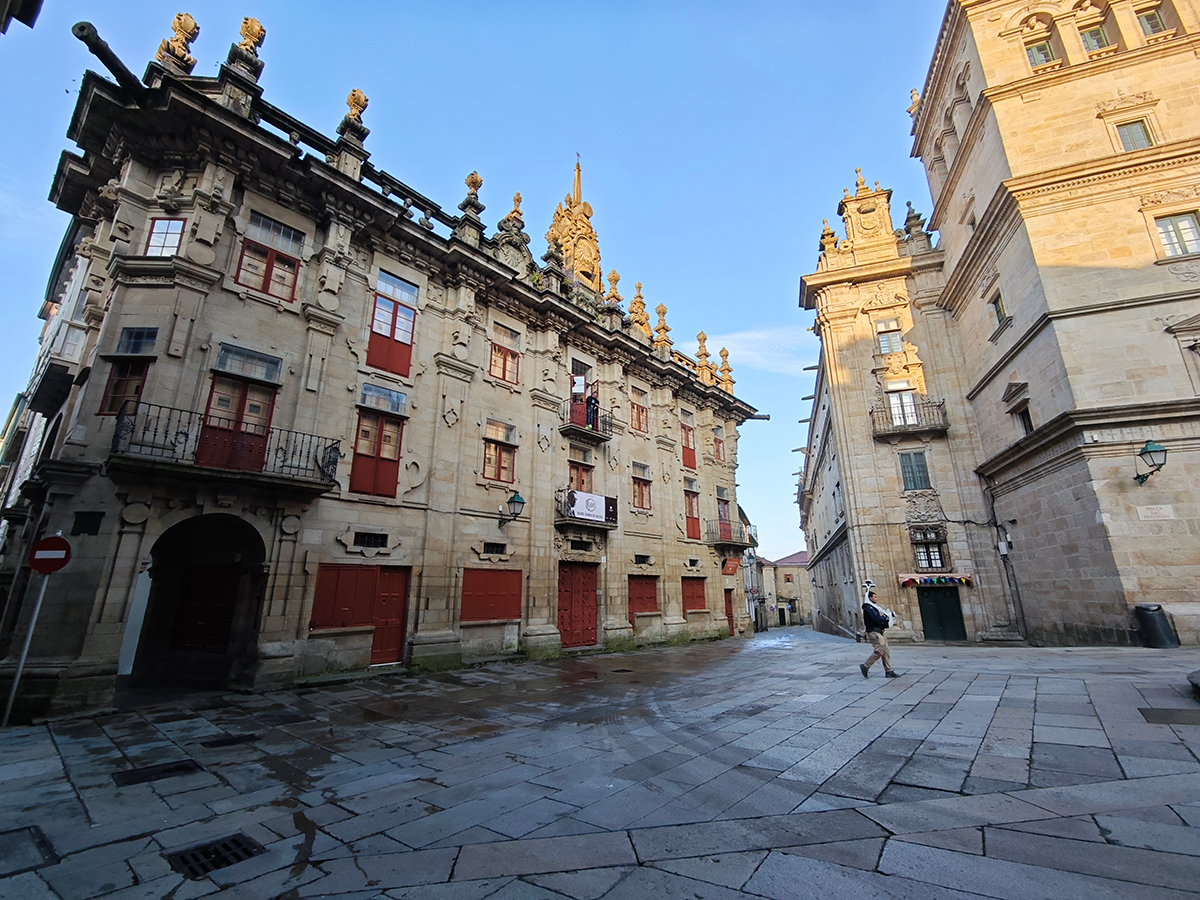

The complete technical documentation necessary for the preparation of proposals is now available to all teams participating in the International Competition for Ornamental and Artistic Lighting of the monumental surroundings of the Cathedral of Santiago de Compostela. This provides contestants with all the relevant information to design innovative, heritage-respectful, and sustainable lighting interventions, in line with the principles of the competition.
The following link provides access to the folders and files, along with the password required to enter:
Link: http://scqoc.santiagodecompostela.gal/index.php/s/vvqITcpMFuV5DJx
Password: ConcursoTurismo25!.
Teams will have access to a comprehensive documentation package and complete digitization work carried out in the Cathedral’s surroundings. This information will allow for a deep understanding of the historical, artistic, regulatory, and technical context of the intervention area—crucial for developing their proposals.
The documentation package is an essential resource for participants to understand the context. This compendium covers the historical significance of the intervention site, from its unique origin as a pilgrimage center to the present day. It outlines the heritage value of the various elements making up the urban landscape around the cathedral, as well as the history of lighting in the city—from the earliest oil and gas lights to the arrival of electricity.
In addition to maps and images, the package includes urban planning and heritage protection regulations in force at the national, regional, and local levels, with references to the BIC (Asset of Cultural Interest) designation of the Cathedral complex and the historic-artistic ensemble of Santiago, as well as its inclusion on the UNESCO World Heritage List. It also details best practices for preparing heritage impact studies, considering the site’s Outstanding Universal Value (OUV). All this information aims to ensure that lighting proposals are not only innovative and aesthetic, but also fully integrated and respectful of the unique historical and cultural value of the heart of Santiago de Compostela.
The digitization work enables the creation of a detailed digital representation of the Cathedral’s surroundings. For this, a network of precisely georeferenced bases was established using GNSS observations. During the digitization phase, three technologies were combined: aerial photogrammetry (both day and night), terrestrial photogrammetry (using a Matterport PRO3 device), and dynamic terrestrial LIDAR (using NavVis VLX technology). The goal of these technologies was to obtain a georeferenced, color, and high-density point cloud capable of defining the necessary details for the lighting project. Specialized software was also used to generate outputs such as 3D models, orthophotos, and 360° images. This process ensures a complete and accurate database for the development of the lighting proposals.